Curve frame
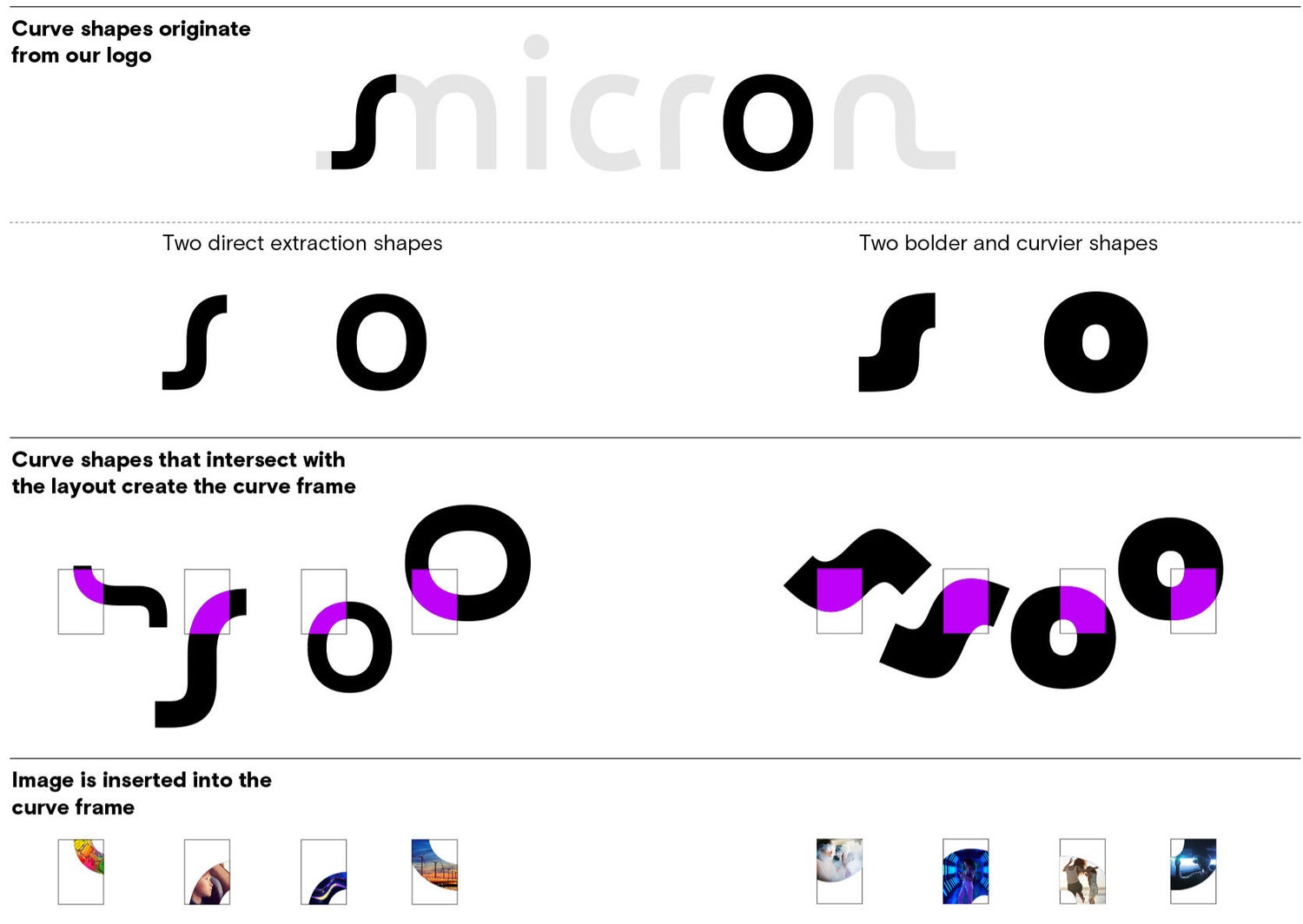
The curve frame is a portal to the Micron world. It’s built from the DNA of our logo. The shapes of our curve frame come from the “m” and “o” in our logo. The frame is primarily used to contain imagery, but it can also be used to divide content in layout.

Click to expand
Creation
Our curve frames are based on four primary shapes:
- two extracted directly from the “m” and “o” of our logo
- two modified to be bolder and curvier
All curve frames can be used interchangeably. They can be scaled and angled to meet any layout requirement.
The curve frame sits at the intersection of the curve shape and the layout, creating an opening for imagery.

Click to expand
Usage
The curve frame should not be overused. Reserve these shapes for hero moments.
These impactful shapes are likely the first thing that viewers will notice on brochure covers, website headers, posters or digital banners.
Acceptable usage


Click to expand
Imagery placement
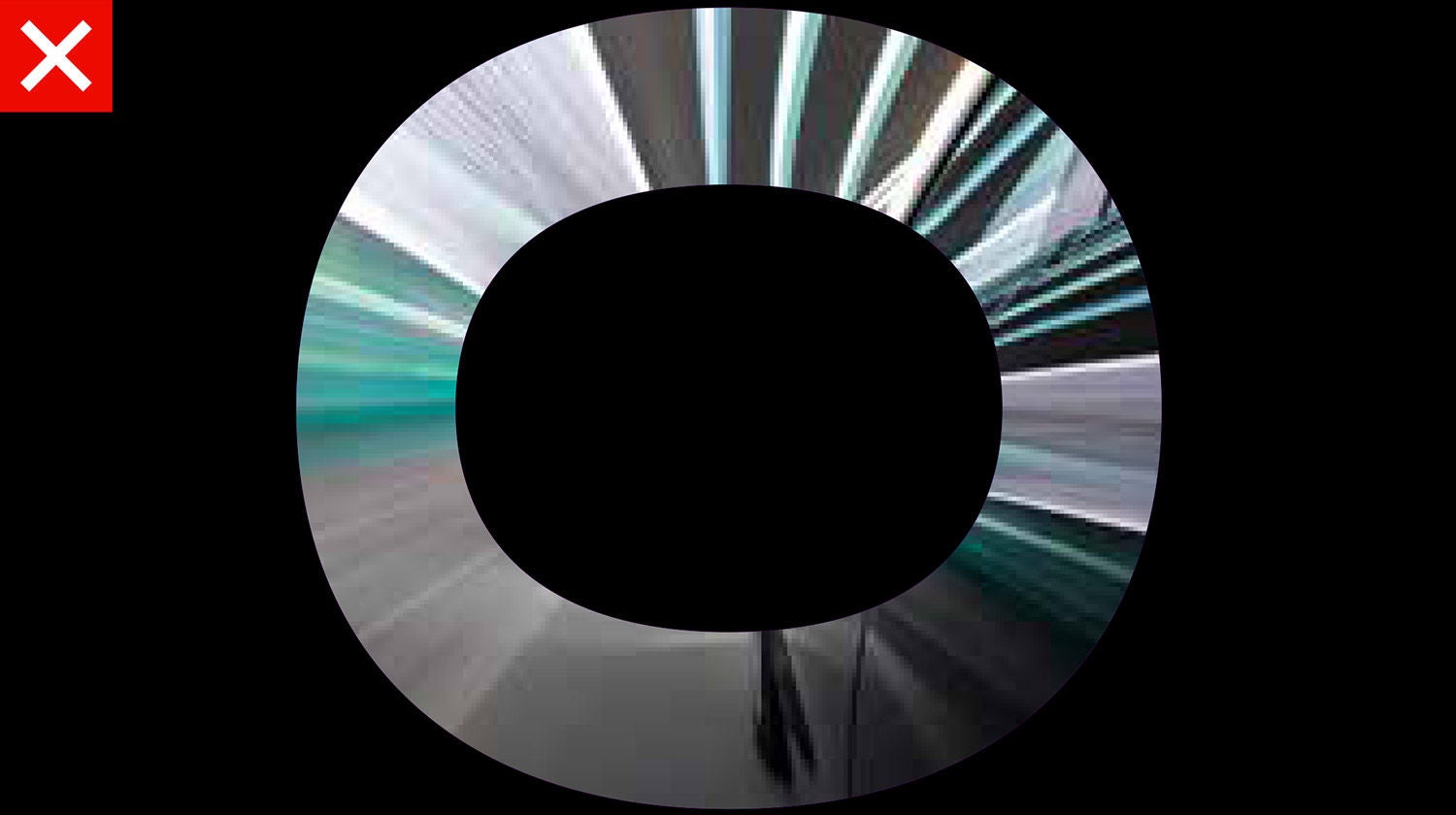
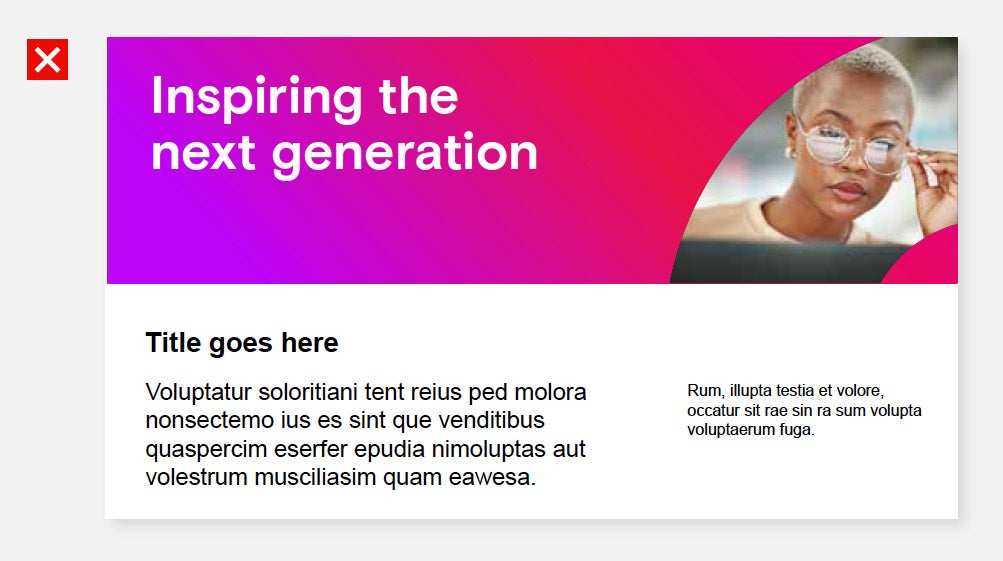
Use imagery from our image library in the curve frame. Imagery can include our selection of abstract images.
When the image includes a subject, the subject should be framed by the curve.
There should be contrast between the background and the image to make the curve frame visible:
- Darker photography should be paired with our bright gradients. When choosing imagery, consider which tone and color palette best match the gradient.
- Lighter photography should be paired with our dark gradients to provide enough contrast so the edges of the curve frame are visible.
- Bright and colorful photography should be paired with our black background to emphasize the image.

Click to expand
Background color
Our curve frame may contain imagery placed on top of our bright gradients, dark gradients and black background.
Ensure the gradient is at an angle, flowing from corner to corner and avoiding hard breaks (as shown on the gradient page).
Please note that black and white backgrounds are an important part of maintaining the brand’s visual balance but should be used primarily in linear layouts.
Our gradients and our curve shape are intended to be the first thing viewers notice, followed by black and white linear elements to achieve overall visual balance. See examples of this layout hierarchy on the gradient usage page.

Click to expand
Typography usage
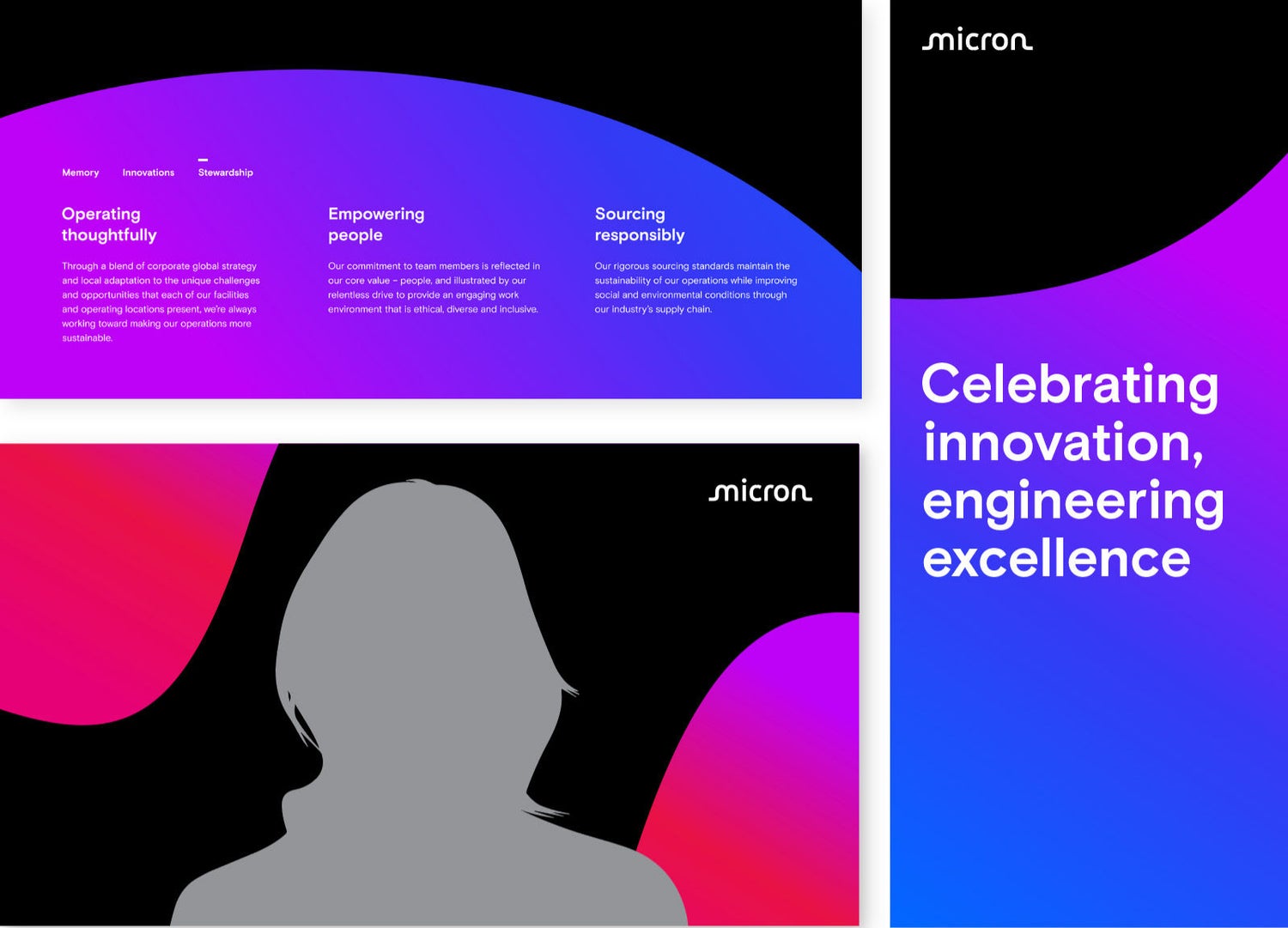
Place type outside the curve frame. The frame allows the image to remain inside the shape, leaving space for copy outside the frame.
You can place the logo or group marks on top of the image inside the frame, but adhere to clear space rules. Make sure the image isn’t overly busy and doesn’t impede logo legibility.
The logo can also be placed on the gradient, maintain logo legibility in these instances as well.
Click to expand
Content divider
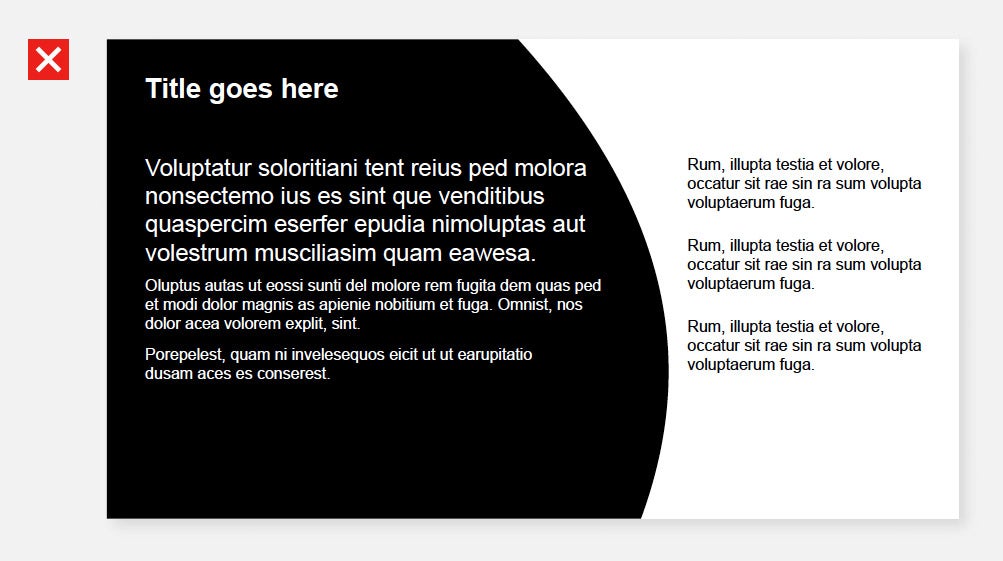
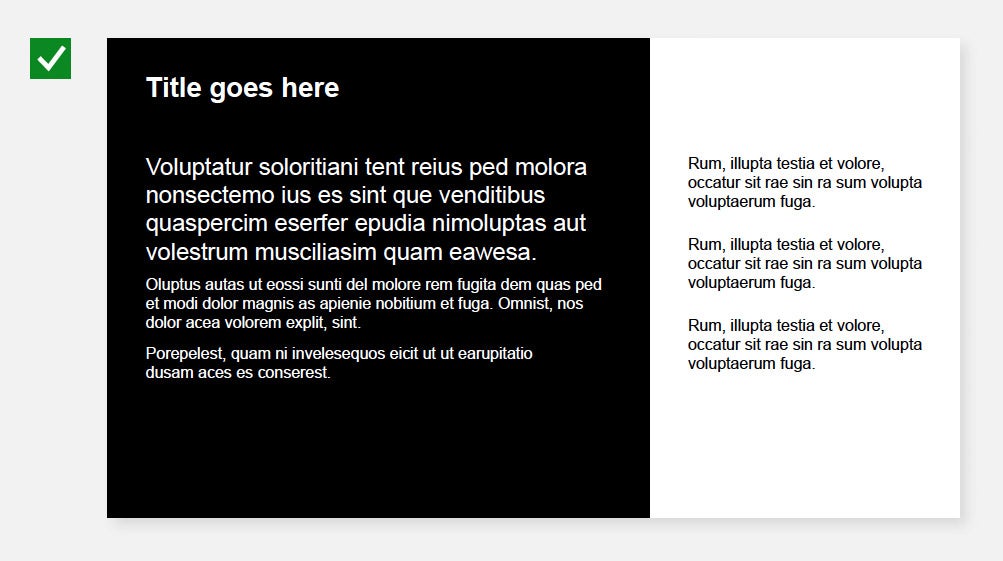
The curve frame is primarily used to contain photography, but it can also be used to create fields of color for content organization and differentiation.
Use these treatments for hero moments only.